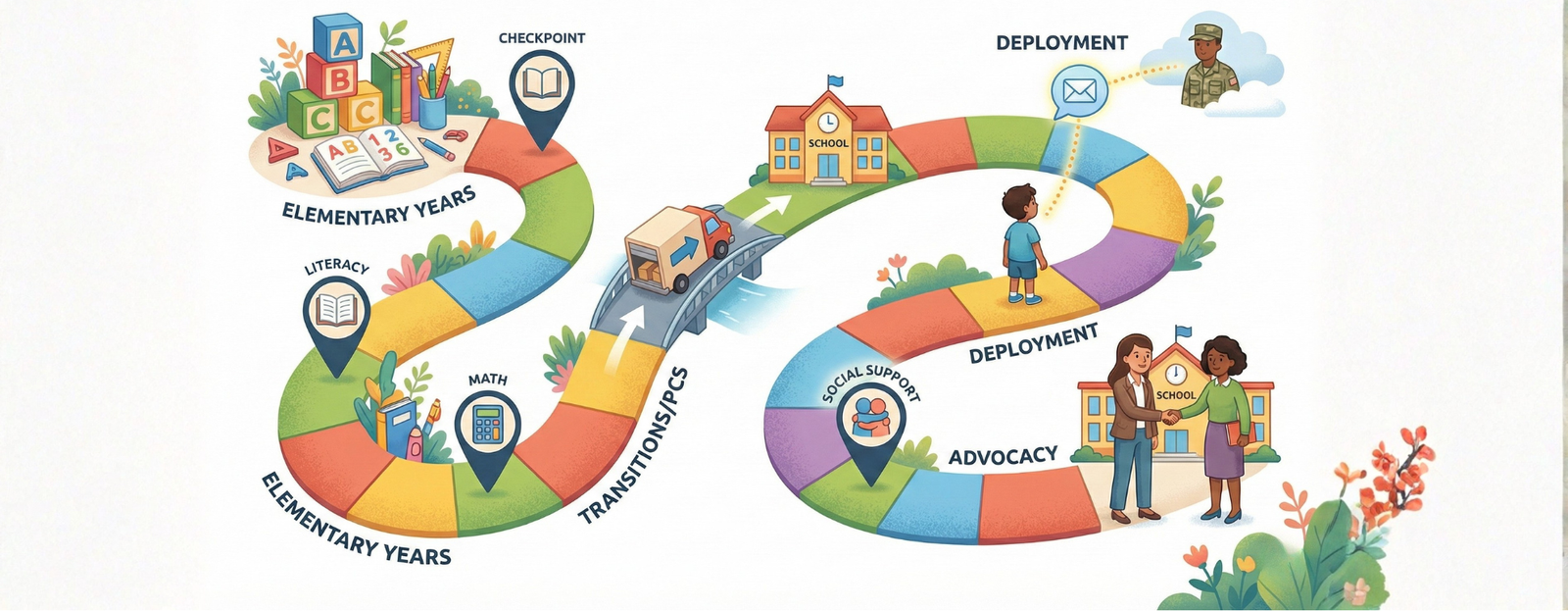
Elementary School Success Strategies
Elementary years establish the academic, social, and organizational foundations that influence a child's entire educational career. For military families, these years may span multiple schools across different states or countries, making parental guidance particularly crucial.
Building Strong School Relationships
As emphasized in multiple articles, including the May 2024 interview with Dr. Thomas Taylor, strong relationships with your child's teachers and school staff provide essential continuity:
Parent-Teacher Partnerships:
- Attend open houses and introductory events
- Schedule early conferences, especially after mid-year moves
- Volunteer when possible to observe classroom dynamics
- Communicate military status and potential deployments/moves
- Express appreciation for teachers' efforts through notes or participation in Teacher Appreciation Week (May 6-10)
Engaging with School Communities:
- Join the PTA/PTO/PTSO as suggested in the August 2024 article
- Participate in school events and volunteer opportunities
- Connect with other military families at the school
- Attend school board meetings to understand district priorities
Building Administrator Relationships:
- Introduce yourself to principals and counselors
- Understand the chain of communication for concerns
- Learn about available support services and how to access them
Academic Foundations
Elementary years focus on building critical skills that impact all future learning:
Literacy Development:
- Maintain consistent reading routines regardless of moves
- Understand grade-level reading benchmarks and track progress
- Request reading assessments after transitions to identify potential gaps
- Utilize school and installation libraries for continuous access to books
Mathematical Foundations:
- Monitor mastery of grade-level concepts, especially after moves
- Understand how math curriculum approaches differ between states/countries
- Use resources like Khan Academy to bridge curriculum differences
- Make math relevant through real-life applications (cooking, shopping, budgeting)
Supporting the Whole Child:
- Encourage curiosity and exploration across subjects
- Balance academic focus with physical activity and creative expression
- Monitor social development and friendship formation
- Provide emotional support during transitions and separations
Monitoring Progress and Addressing Concerns
The August 2024 article emphasizes the importance of tracking your child's progress:
Understanding Assessments:
- Request copies of all assessment results
- Maintain a file of benchmark tests and evaluation results
- Compare assessments across schools after moves
- Understand how different states measure achievement
Early Intervention:
- Address academic concerns promptly
- Learn about available intervention services at each school
- Consider how to maintain support services during transitions
- Understand your rights under educational laws like IDEA and Section 504
As the August 2024 article notes, "The goal is to make sure your student is on grade level in reading and math by the end of third grade." This milestone is critical, as instruction shifts from "learning to read" to "reading to learn" after third grade.
Navigating Transitions During Elementary Years
Elementary-aged children have specific needs during school transitions:
Before Moving:
- Notify the school as soon as PCS orders are received
- Request complete records, including samples of work
- Ask teachers for narratives about your child's learning style and needs
- Create a memory book or project about the current school
During Transition:
- Maintain learning routines during moves
- Visit the new school website with your child
- Read books about the new location
- Practice key academic skills to prevent regression
After Arrival:
- Tour the school before the first day if possible
- Meet with the teacher to share information about your child
- Establish new routines quickly
- Monitor adjustment and provide additional support as needed
Deployment Support in Elementary Years
Young children process deployment in concrete ways and may express concerns through behavior changes:
Before Deployment:
- Inform teachers about upcoming separations
- Create communication plans between the deployed parent and school
- Prepare comfort items or routines for difficult days
- Establish consistent caregiving arrangements
During Deployment:
- Maintain school routines rigorously
- Check in regularly with teachers about emotional or behavioral changes
- Create opportunities for the deployed parent to connect with academic life
- Consider school counseling resources for additional support
After Reunion:
- Prepare for potential adjustment challenges
- Communicate changes in family dynamics to teachers
- Reintegrate the returning parent gradually into school involvement
- Monitor for delayed reactions to the separation
Elementary years provide the foundation upon which all future learning builds. By actively engaging with schools, monitoring progress, supporting transitions, and addressing deployment impacts, military parents can help ensure their children develop the academic skills, learning attitudes, and emotional resilience needed for continued success.
Middle School Transitions and Planning
The middle school years represent a pivotal transition period—academically, socially, and developmentally. For military families, these years often coincide with significant moves, increasing the importance of careful planning and support.
Understanding the Middle School Environment
Middle schools typically differ significantly from elementary schools:
Structural Changes:
- Multiple teachers and classrooms
- Departmentalized instruction
- Increased independence and responsibility
- More complex scheduling and assignments
- Introduction of elective courses
Developmental Context:
- Rapidly changing physical, emotional, and cognitive development
- Increased focus on peer relationships and social dynamics
- Growing independence from parents
- Developing identity and interests
- Heightened self-consciousness
For military adolescents, these universal middle school challenges combine with the potential stress of moves, deployments, and adapting to new communities—making parental guidance particularly important.
Academic Planning and Preparation
The August 2024 article emphasizes that middle school is "the time to shore up the gaps students may still have in preparation for high school." This critical period requires intentional planning:
Five-Year Planning:
- Develop a five-year plan with counselors as suggested for 7th graders
- Understand how current courses affect high school options
- Learn graduation requirements for potential future locations
- Identify your child's strengths, interests, and potential career paths
Mathematics Pathway:
- Pay special attention to the math sequence, which becomes increasingly sequential
- Understand how math placement affects high school STEM opportunities
- Consider how curriculum differences between schools might create gaps
- Provide support during transitions to maintain continuous progress
Course Selection Strategies:
- Choose courses that develop well-rounded skills
- Balance core academics with exploratory electives
- Consider world language options and when to begin
- Understand prerequisite requirements for advanced high school courses
Assessment and Progress Monitoring:
- Continue taking the PSAT in October as recommended
- Track benchmark assessments across moves
- Maintain records of strengths and areas needing support
- Address academic gaps promptly through tutoring or additional support
Social-Emotional Support During Middle School
Middle school brings significant social and emotional changes that may be complicated by military life:
Building Peer Connections:
- Encourage participation in activities and clubs to form friendships
- Understand that social adjustment may take time after moves
- Help your child maintain connections with friends from previous locations
- Teach strategies for navigating new social environments
Developing Independence:
- Gradually increase responsibility for managing assignments and communications
- Teach self-advocacy with teachers and staff
- Guide rather than direct problem-solving
- Maintain appropriate supervision while encouraging growth
Supporting Identity Development:
- Recognize your child's developing interests and strengths
- Expose them to various career possibilities
- Encourage exploration through extracurricular activities
- Help them understand how their military experience shapes their perspective
Career Exploration and Future Planning
Middle school provides an ideal opportunity to begin exploring future paths:
Career Awareness:
- Have your student take Career Cluster Surveys as recommended in the August 2024 article
- Discuss various career fields and educational pathways
- Arrange informational interviews or job shadowing when possible
- Connect school subjects to real-world applications and careers
College Awareness:
- Begin visiting college campuses casually during family trips
- Attend the College Fair for 8th graders at Spotsylvania Mall
- Discuss different types of post-secondary education
- Help your child understand the connection between current effort and future opportunities
Navigating Transitions During Middle School Years
The social importance of middle school makes transitions particularly challenging:
Academic Transitions:
- Request detailed course descriptions and textbook information when moving
- Identify potential curriculum gaps and develop plans to address them
- Advocate for appropriate placement at the new school
- Understand how elective sequences may be affected by moves
Social Transitions:
- Recognize the heightened importance of peer acceptance at this age
- Help your child maintain previous friendships while developing new ones
- Identify activities and interests that can facilitate new connections
- Be patient with adjustment challenges and emotional responses
Deployment Impacts:
- Understand that middle schoolers may show less obvious signs of deployment stress
- Establish clear expectations for academic performance during separations
- Create appropriate independence while maintaining supervision
- Facilitate continued connection between the deployed parent and school activities
The middle school years establish critical academic foundations while supporting significant developmental transitions. By focusing on long-term planning, addressing gaps promptly, supporting social-emotional development, and facilitating successful transitions, military parents can help their adolescents navigate these pivotal years successfully.
Supporting Children at Different Academic Levels
Military children may experience varying academic trajectories due to frequent moves, curriculum differences between schools, and the emotional impacts of military life. Understanding how to support children at different academic levels is essential for ensuring continuous progress.
Identifying Academic Readiness and Needs
Accurate assessment of your child's academic standing provides the foundation for appropriate support:
Assessment Strategies:
- Request and review standardized test results across multiple years
- Compare performance across different subject areas to identify patterns
- Consider both academic skills and learning behaviors (organization, attention, persistence)
- Seek teacher observations about classroom performance versus test results
- Consider how transitions or deployments may have affected recent performance
Recognizing Potential Issues:
- Watch for sudden changes in grades or interest in school
- Note discrepancies between effort and results
- Be alert to signs of frustration, avoidance, or anxiety about schoolwork
- Consider whether behavioral issues might mask academic struggles
- Track performance after moves to identify potential curriculum gaps
Communication with Schools:
- Schedule conferences specifically to discuss academic progress
- Ask for specific examples of strengths and challenges
- Request information about grade-level expectations and benchmarks
- Inquire about available assessment tools if concerns exist
- Discuss how military transitions may have affected learning
Supporting Advanced Learners
The October 2024 article highlights the importance of "challenging high-achieving students to prevent boredom and disengagement." Military children with advanced academic abilities require specific support to maintain engagement through transitions:
Identification and Advocacy:
- Understand gifted identification procedures in each new school district
- Maintain records of previous gifted program participation and assessments
- Advocate for appropriate placement based on demonstrated abilities
- Request above-grade-level work when appropriate
- Understand that gifted identification may look different across states
Academic Enrichment:
- Explore advanced academic programs available at each new school
- Consider supplemental learning opportunities (competitions, summer programs)
- Provide challenging materials at home to extend learning
- Connect with mentors in areas of special interest
- Utilize online resources for advanced content when local options are limited
Social-Emotional Support:
- Recognize that advanced learners may experience asynchronous development
- Help your child connect with intellectual peers
- Address perfectionism and unrealistic expectations
- Validate the challenge of being "new" and academically advanced
- Support healthy identity development beyond academic achievement
Supporting Students Needing Additional Help
When children struggle academically, consistent support through transitions becomes particularly important:
Intervention and Support:
- Learn about available intervention programs at each school
- Request specific information about your child's response to interventions
- Consider supplemental support through tutoring or educational therapy
- Maintain consistent support during moves and deployments
- Address foundational skill gaps before moving to more advanced content
Special Education Services:
- Understand your rights under the Individuals with Disabilities Education Act (IDEA)
- Maintain comprehensive records of evaluations, IEPs, and 504 plans
- Learn about the Interstate Compact provisions for special education
- Request comparable services at new schools during transitions
- Consider how services might need adjustment during deployment periods
Building Academic Confidence:
- Celebrate effort and progress rather than focusing solely on grades
- Provide opportunities for success in areas of strength
- Teach and reinforce effective study strategies
- Help your child understand their learning profile
- Foster a growth mindset about academic challenges
Educational Decision-Making During Transitions
The March 2024 article emphasizes that "educational decisions during PCS moves should prioritize individual student needs rather than convenience." Consider these factors when making educational choices during transitions:
Timing Considerations:
- Evaluate the benefits of completing a school year versus early transition
- Consider critical academic milestones when timing moves
- Plan transitions around natural breaks when possible
- Understand how timing affects course placement and credit transfer
- Consider the impact of moves on testing schedules and graduation requirements
School Selection Factors:
- Research academic programs that match your child's needs and interests
- Consider schools' experience with military students
- Evaluate available support services for specific learning needs
- Assess extracurricular opportunities that support your child's development
- Consider transportation and logistics within your family's schedule
Continuity Strategies:
- Consider online or correspondence options during transitions
- Explore year-round schooling options to minimize summer regression
- Investigate credit recovery options if moves create academic gaps
- Maintain consistent expectations across different school environments
- Create transition plans with both sending and receiving schools
Partnering with Schools for Individualized Support
Effective partnerships with schools ensure appropriate support at every academic level:
Collaborative Approach:
- Approach teachers and administrators as partners in your child's education
- Share relevant information about your child's learning history
- Provide context about military experiences that may affect learning
- Express appreciation for efforts to accommodate your child's needs
- Maintain regular communication about progress and challenges
Formal Support Plans:
- Understand the different types of support plans (IEP, 504, intervention plans)
- Request evaluation if you suspect learning difficulties
- Participate actively in meetings about your child's educational plan
- Ensure plans include specific, measurable goals
- Review and update plans regularly, especially after transitions
Utilizing School Resources:
- Learn about available support services at each school
- Connect with school counselors about academic and social-emotional needs
- Explore before/after school programs for additional support
- Utilize school liaison officers to navigate educational systems
- Access technology resources available through the school
Calendars, Planning, and Organization
Effective planning and organization are essential skills for military families navigating educational systems. As noted in the March 2024 article, "Military families must become masters of planning and organization to maintain educational continuity through frequent transitions."
Family Calendar Management
A comprehensive family calendar system helps coordinate educational commitments with military obligations:
Creating Effective Calendar Systems:
- Maintain both digital and physical calendar systems
- Color-code for different family members and types of activities
- Include school events, military commitments, and extracurricular activities
- Mark deployment dates, training periods, and block leave opportunities
- Note school calendar variations (early dismissals, holidays, teacher workdays)
Coordinating Multiple Schedules:
- Hold weekly family meetings to review upcoming events
- Identify potential conflicts between school and military commitments
- Develop contingency plans for unexpected schedule changes
- Establish clear communication protocols for schedule updates
- Create backup plans for childcare and transportation
Long-Term Planning:
- Map out key academic dates for the entire school year
- Anticipate potential PCS moves and their timing
- Plan for known deployment cycles and their educational impact
- Schedule regular check-ins on academic progress
- Anticipate transition points between schools or grade levels
Educational Planning Through the Year
Different times of year require specific educational planning approaches:
Beginning of School Year:
- Establish communication with new teachers
- Review curriculum expectations and major projects
- Set up organizational systems for each child
- Schedule initial parent-teacher conferences
- Identify volunteer opportunities and school events
Mid-Year Planning:
- Review first semester progress and adjust support as needed
- Address any emerging academic concerns
- Prepare for standardized testing periods
- Begin planning for summer learning opportunities
- Update records if mid-year moves are anticipated
End of Year and Summer:
- Collect end-of-year assessments and work samples
- Request teacher recommendations if moving
- Plan summer learning activities to prevent regression
- Prepare for transitions to new schools or grade levels
- Schedule educational activities during summer PCS moves
Record-Keeping for Educational Continuity
Comprehensive educational records are essential for military families who may change schools frequently:
Academic Records Management:
- Maintain a portable file of official school records
- Keep copies of report cards, standardized test results, and evaluations
- Document extracurricular activities, awards, and accomplishments
- Preserve samples of significant work from each grade level
- Create a summary of curriculum covered at each school
Special Education Documentation:
- Maintain complete copies of all IEPs or 504 plans
- Keep records of all evaluations and assessment results
- Document successful accommodations and interventions
- Track service minutes and delivery methods
- Preserve communication with special education teams
Digital Organization:
- Create cloud-based storage for educational documents
- Scan paper records for electronic backup
- Organize digital files by child, school year, and category
- Maintain contact information for key educational personnel
- Consider password-protected options for confidential information
Teaching Organizational Skills to Children
Helping children develop their own organizational systems prepares them for educational transitions:
Age-Appropriate Organization:
- Elementary: Simple folder systems, visual schedules, and checklists
- Middle School: Planners, subject-specific organization, and time management
- High School: Digital/paper hybrid systems, long-term planning, and independent management
Study Space Organization:
- Create dedicated study areas with necessary supplies
- Establish systems that can be replicated after moves
- Teach maintenance of organized spaces
- Develop portable organization solutions for transitions
- Minimize distractions in study environments
Time Management Skills:
- Teach backward planning for projects and assignments
- Help children break large tasks into manageable steps
- Establish routines for daily and weekly planning
- Introduce digital tools for time management as appropriate
- Model effective time management in family activities
Planning for Educational Transitions
Proactive planning for school transitions helps maintain educational continuity:
Pre-Move Planning:
- Research school options at the new location
- Contact the School Liaison Officer for guidance
- Request complete records from the current school
- Identify potential curriculum differences or gaps
- Prepare your child emotionally and academically for the change
During-Move Learning:
- Maintain educational routines during transition periods
- Utilize travel time for educational activities
- Document learning experiences related to the move itself
- Prepare questions for the new school
- Review key academic concepts to maintain skills
Post-Move Integration:
- Schedule meetings with new teachers and counselors
- Monitor adjustment to new curriculum and expectations
- Identify and address any learning gaps promptly
- Connect with school and community resources
- Establish new routines that support educational success
By developing effective planning and organizational systems, military families create the structure needed to support educational success through transitions. These skills not only benefit children's current academic progress but also establish lifelong habits that will serve them in future educational and career endeavors.