School Readiness and Early Education
The foundation of your child's educational journey begins long before their first day of kindergarten. As a military parent, understanding what constitutes "school readiness" can help you prepare your child for success, regardless of where your service takes your family.
Understanding School Readiness
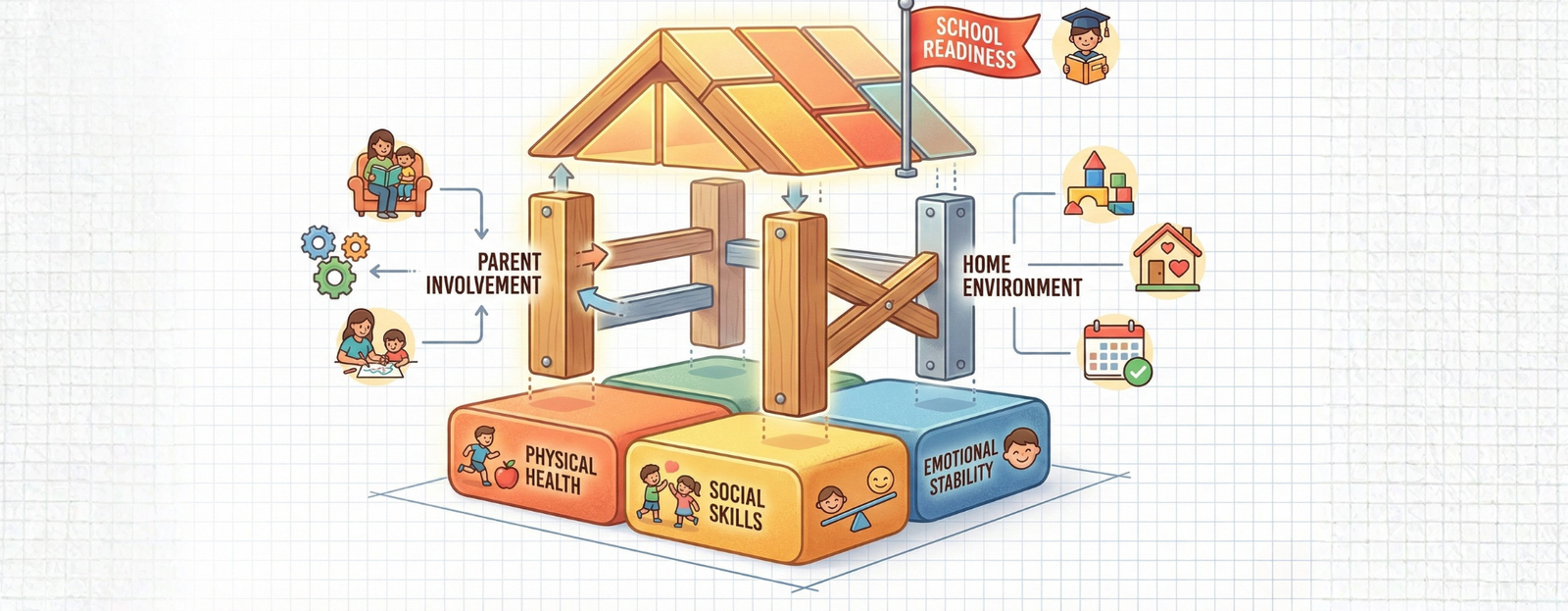
The Virginia Department of Education (VDOE) defines school readiness as: "the capabilities of children, their families, schools, and communities that best promote student success in kindergarten and beyond. Each component—children, families, schools, and communities—plays an essential role in developing school readiness. No one component can stand on its own."
This holistic definition reminds us that readiness isn't just about academic skills like knowing letters or numbers. It encompasses physical, social, emotional, and cognitive development, as well as the readiness of schools to meet children where they are developmentally.
For military families who may move frequently, this comprehensive view of readiness is particularly important. Your child may transition between different state systems with varying kindergarten age cutoffs, curriculum expectations, and assessment approaches. Building a strong foundation in all developmental areas creates adaptability that serves children well during transitions.
Key Developmental Areas for School Readiness
Physical Development and Health:
- Fine motor skills (holding pencils, cutting with scissors)
- Gross motor skills (running, jumping, balancing)
- Self-care abilities (managing bathroom needs, washing hands)
- Health and wellness routines
Social and Emotional Development:
- Separating from parents without extreme distress
- Taking turns and sharing
- Following multi-step directions
- Expressing needs and emotions appropriately
- Developing self-regulation skills
Language and Communication:
- Speaking in complete sentences
- Following conversations
- Expressing thoughts and needs verbally
- Building vocabulary
- Early literacy interests (enjoying books, telling stories)
Cognitive Development:
- Curiosity and problem-solving
- Basic counting and number concepts
- Letter recognition and phonological awareness
- Shape and color recognition
- Classification and sorting skills
Military-Specific Considerations for Early Education
Military families face unique considerations when preparing children for school:
- Consistency Amid Change: Establish consistent routines and expectations that can travel with your family regardless of location.
- Documentation: Maintain a portfolio of your child's developmental progress, immunization records, and any evaluations or screenings to ensure continuity during transitions.
- Building Resilience: Help your young child develop adaptive skills and emotional vocabulary to navigate changes.
- Community Connections: Utilize military-specific early childhood programs like those offered through Child Development Centers (CDCs) on installations, which understand the unique needs of military children.
Practical Steps for Building School Readiness
Create a learning-rich home environment:
- Read together daily
- Engage in conversations about everyday experiences
- Provide materials for creative expression
- Incorporate counting and sorting into daily activities
Develop independence skills:
- Practice self-help skills like dressing, managing backpacks, and opening lunch containers
- Encourage completion of age-appropriate responsibilities
- Allow time for problem-solving without immediate intervention
Build social experiences:
- Arrange playdates with peers
- Participate in group activities like library story times
- Practice taking turns and sharing
- Expose children to group settings similar to classrooms
Establish school-like routines:
- Create consistent sleep schedules
- Practice separation in safe environments
- Develop morning routines that mirror school-day preparations
- Introduce the concept of focused activity times
Connect with early intervention if needed:
- Be aware of developmental milestones
- Don't hesitate to seek evaluation if you have concerns
- Utilize military healthcare benefits for developmental screenings
Choosing Early Education Programs
When selecting preschools or early education programs, military families should consider:
- Availability and Waitlists: Many local preschools have long waiting lists. Research options early, especially when you know a PCS is coming.
- Quality Indicators: Look for programs with appropriate accreditation, qualified staff, developmentally appropriate practices, and safe, engaging environments.
- Military-Friendly Policies: Some programs better understand military life and offer flexibility for deployment, TDY, or PCS situations.
- Curriculum Approaches: Familiarize yourself with different early childhood education philosophies (Montessori, Reggio Emilia, play-based, academic) to find what best suits your child.
- Transition Support: Evaluate how programs help children adjust when entering or leaving mid-year.
Remember that high-quality early childhood experiences set the stage for future learning, but parents remain the most influential teachers in a child's life. The consistent support, engagement, and encouragement you provide create a foundation that travels with your child regardless of how often you move.
"As parents, we are our children's first teachers—whether we recognize it or not." This statement reminds us of the powerful role we play in preparing our children for educational success.
The journey to kindergarten should be both exciting and fun. Take time to enjoy these precious moments—they pass quickly, but the foundation you're building will support your child throughout their educational journey.
Family Involvement in Education
As a military parent, your involvement in your child's education takes on heightened importance. Research consistently shows that parent engagement is one of the strongest predictors of academic success, regardless of socioeconomic status or background. For military families navigating frequent transitions, your active involvement provides critical continuity in your child's educational experience.
The Impact of Parent Involvement
Studies by the Harvard Family Research Project and other institutions consistently demonstrate that children with involved parents:
- Earn higher grades and test scores
- Develop better social skills and classroom behavior
- Are more likely to graduate and pursue higher education
- Show greater resilience during transitions and challenges
For military children specifically, parent involvement serves as an educational anchor through moves, deployments, and other transitions. When curriculum, teachers, classmates, and school cultures change, your consistent involvement provides stability that helps maintain academic progress.
Building Effective School Partnerships
As highlighted in Dr. Thomas W. Taylor's tip, "Make sure you have a relationship with your kids' teacher." This foundational relationship creates a team approach to supporting your child. Here's how to build effective partnerships:
Establish Early Communication:
- Introduce yourself at the beginning of the school year
- Share your military status and any anticipated changes (deployments, possible moves)
- Provide preferred contact information and communication methods
- Ask about the teacher's preferred communication channels
Maintain Regular Connection:
- Attend parent-teacher conferences and school events
- Respond promptly to teacher communications
- Schedule check-ins at natural intervals (grading periods, semester changes)
- Share significant family changes that might affect learning or behavior
Approach as a Team:
- Emphasize your shared goal of supporting your child's success
- Listen actively to teacher insights and observations
- Share your observations of your child's learning at home
- Collaborate on addressing challenges rather than assigning blame
Navigate Challenges Professionally:
- Address concerns directly with the teacher first
- Maintain respectful communication even during disagreements
- Document important conversations and agreements
- Follow appropriate channels if escalation becomes necessary
Military-Specific Communication Strategies
Military families may need additional communication approaches:
Deployment Preparation:
- Meet with teachers before deployment to establish communication plans
- Set up systems for the deployed parent to remain involved (video messages for projects, email updates)
- Share age-appropriate information about how deployment might affect your child
PCS Transitions:
- Request meetings with both sending and receiving schools
- Facilitate information transfer beyond official records
- Advocate for appropriate placement and needed support
Remote Involvement:
- Utilize technology for virtual participation in conferences and events
- Establish regular email check-ins with teachers during separations
- Create systems for reviewing schoolwork from a distance
Creating a Learning-Rich Home Environment
Your home environment significantly impacts educational success, regardless of where military service takes your family:
Physical Space:
- Designate a consistent study area with necessary supplies
- Minimize distractions during homework and study time
- Display educational materials and children's work
- Create organization systems that travel easily during moves
Routines and Expectations:
- Establish consistent homework and reading times
- Create morning and evening routines that support school success
- Communicate clear expectations about effort and academic integrity
- Maintain educational consistency during school breaks
Enrichment and Extension:
- Connect school learning to real-world experiences
- Visit local museums, parks, and cultural sites in each new location
- Utilize installation and community resources for educational enrichment
- Incorporate educational activities into family traditions that travel with you
Balancing Involvement with Independence
Effective parental involvement evolves as children mature:
Elementary Years:
- Provide more direct supervision and assistance
- Teach organizational and study skills
- Communicate frequently with teachers
- Help establish homework routines
Middle School Years:
- Shift toward monitoring rather than direct management
- Support development of independent problem-solving
- Maintain awareness of assignments and progress
- Focus on building executive function skills
High School Years:
- Serve more as consultant than manager
- Support student-initiated communication with teachers
- Help with long-term planning and goal setting
- Prepare for post-secondary transitions
For military families, this evolution may need adjustment based on transitions, deployments, and individual needs. Some children may need more support during periods of change, while others might benefit from additional independence to develop resilience.
Time Management for Families
In military life, time management takes on heightened importance as families navigate deployments, training schedules, moves, and the constant juggling of military and family responsibilities. "Time is one of the few resources you can never get back. Once it's gone, it's gone."
Family Calendar Systems
The importance of maintaining both paper and digital calendar systems:
Paper Calendars:
- Provide visual accessibility for all family members
- Create a central information hub in a prominent location (kitchen, family command center)
- Allow for recording not just appointments but milestone moments ("made the team," "accepted to college")
- Serve as both functional tool and memory keeper
Digital Calendars:
- Enable sharing and synchronization among family members
- Send automatic reminders and notifications
- Allow access from multiple locations and devices
- Facilitate coordination during separations or deployments
Creating Effective Calendar Systems:
- Place in a central location accessible to all family members
- Color-code for different family members or types of activities
- Include school events, appointments, activities, and military obligations
- Mark deployment dates, training periods, and block leave opportunities
- Note school calendar variations (early dismissals, holidays, teacher workdays)
Teaching Children to Use Family Calendars:
- Encourage older children to add their own events
- Establish family habits of checking the calendar daily
- Hold weekly family meetings to review upcoming events
- Assign age-appropriate calendar-checking responsibilities
Balancing Military and Educational Demands
Military families face unique time management challenges:
- Unpredictable training schedules and deployment timelines
- Conflicting obligations between military duties and school events
- Limited leave availability that may not align with school calendars
- Single-parent functioning during deployments or training
Strategies for Balance:
- Prioritize events that are most significant for your child's development
- Communicate proactively with commands about important educational events
- Utilize technology for virtual participation when physical presence isn't possible
- Develop backup systems with trusted friends or family members
- Create special traditions to compensate for missed events
Teaching Time Management to Children
Children of different ages need different approaches to time management:
Elementary Age:
- Use visual timers and schedules
- Break tasks into manageable chunks
- Create simple checklists for morning and evening routines
- Begin teaching clock skills and duration concepts
Middle School:
- Introduce planning tools like student planners
- Teach backwards planning for projects
- Establish weekly schedule reviews
- Develop systems for tracking assignments across subjects
High School:
- Support use of digital calendar and task management tools
- Focus on long-term planning and goal setting
- Teach prioritization and decision-making about time use
- Prepare for independent management of college or work schedules
The skills children develop through these progressive time management practices prepare them not just for academic success but for the responsibilities of adult life, military service, or career demands.
Building Educational Resilience in Military Children
Resilience—the ability to adapt to change and bounce back from challenges—is particularly crucial for military children navigating frequent transitions and family separations. Educational resilience specifically refers to the ability to maintain academic progress and engagement despite disruptions.
Understanding Military Child Resilience
"The impact of military life on children varies for each family member, whether immediate or distant, but it is always present." While military life presents challenges, it also develops remarkable strengths in children:
- Adaptability: Military children learn to adjust to new environments, making them better prepared for future life transitions.
- Cultural Competence: Exposure to different regions and sometimes international settings develops appreciation for diversity and cross-cultural skills.
- Independence: Taking on responsibilities during a parent's absence builds self-reliance and problem-solving abilities.
- Perspective: Experiencing the challenges of military life often leads to maturity and appreciation for what truly matters.
Strategies for Building Educational Resilience
Maintain Educational Continuity:
- Keep comprehensive records of academic history, including unofficial transcripts, work samples, and assessment results
- Understand the Interstate Compact on Educational Opportunity for Military Children and its protections
- Research school options early when PCS orders arrive
- Advocate for appropriate placement and needed services at new schools
Develop Strong Learning Foundations:
- Focus on mastery of fundamental skills that transfer across curriculum differences
- Identify and address learning gaps promptly after moves
- Maintain consistent expectations regardless of school placement
- Consider supplemental resources to bridge curriculum differences
Cultivate a Growth Mindset:
- Frame challenges as opportunities for growth
- Emphasize effort over innate ability
- Celebrate improvement and persistence
- Model positive responses to setbacks
Build Support Networks:
- Connect with school liaison officers at installations
- Join parent organizations at schools
- Establish relationships with teachers and counselors
- Create peer connections through activities and sports
Teach Self-Advocacy Skills:
- Help children articulate their needs appropriately
- Role-play difficult conversations about needed support
- Encourage direct communication with teachers when appropriate
- Gradually increase responsibility for managing academic needs
The resilience military children develop through educational challenges becomes a lifetime asset, preparing them for future transitions in higher education, careers, and relationships. By intentionally fostering these skills, you help transform the potential disruptions of military life into opportunities for growth.
As we conclude this foundational chapter, remember that the early educational choices and patterns you establish create the framework for your child's entire academic journey. By understanding school readiness, committing to appropriate involvement, managing time effectively, and building resilience, you provide your military child with the essential tools for educational success regardless of how often you move or what challenges military life presents.